The Hype Loop: Confronting Conformity Bias in Software Architecture
Discover how conformity bias shapes computer science, from historical microservice bloat to the modern rush of embedding LLMs into every feature—and how to build from first principles.
Author
Viruchith Ganesan

In 2004, a series of coordinated bombings devastated the transit system in Madrid, Spain. In the high-pressure investigation that followed, Spanish authorities found a partial fingerprint on a bag of detonators and shared it globally.
The FBI run a search through its automated database, returning a list of potential matches. A senior fingerprint examiner with decades of experience looked at candidate number 15—an Oregon lawyer named Brandon Mayfield—and declared a “100 percent positive identification.”
What happened next is a masterclass in cognitive psychology. A second veteran FBI examiner reviewed the match and verified it. A third examiner looked at it and confirmed it. When Mayfield’s defense team hired an independent, court-appointed forensic expert to challenge the findings, that expert reviewed the files and also agreed with the match.
Mayfield was jailed. There was only one problem: the fingerprint wasn’t his.
The Spanish National Police, working independently outside the sphere of influence of the FBI lab, completely rejected the match. They eventually traced the print to an Algerian national.
An investigation by the U.S. Department of Justice later revealed that the error wasn’t due to technical incompetence. It was driven by conformity bias and confirmation bias. Once the initial senior expert established a baseline narrative, subsequent experts conformed to the group consensus rather than reviewing the raw evidence objectively. They ignored striking structural differences in the prints because the weight of authority and peer alignment made dissent feel impossible.
If top-tier forensic scientists can fall into the trap of herd mentality, software engineers are certainly not immune. In computer science, this exact bias shapes millions of dollars in cloud budgets, dictates tech stacks, and drives teams to over-engineer elegant solutions for problems they don’t actually have.
The Anatomy of Herd Mentality in Tech
In software engineering, conformity bias usually wears a more professional mask. We call it “industry best practices,” “modern standards,” or colloquially, Resume-Driven Development (RDD). It occurs when engineering teams adopt tools, patterns, or frameworks simply because tech giants champion them or because they are trending on social developer hubs, rather than evaluating their objective utility.
The Microservice Bloat
A few years ago, the industry conformed heavily to the microservices trend. Startups with three developers and fewer than a thousand active users began breaking up simple codebases into an intricate web of decoupled microservices, Kubernetes clusters, and distributed tracking meshes. They conformed because Netflix and Amazon wrote brilliant papers on how distributed systems solved their scaling problems.
The result? Teams spent 80% of their time managing network latency, eventual consistency, and complex DevOps pipelines, completely forgetting that their business could comfortably run on a single, well-optimized monolithic server for a fraction of the cost.
The NoSQL Relational Purge
When document stores and NoSQL databases surged in popularity, a collective narrative emerged that traditional relational databases (SQL) were archaic and incapable of handling modern scale. Teams rushed to migrate heavily relational data structures into schema-less document stores. They quickly discovered the hidden tax: writing complex, bug-prone manual join logic in application code to replace the robust, ACID-compliant database joins they had abandoned.
The Modern Manifestation: “LLM Everywhere”
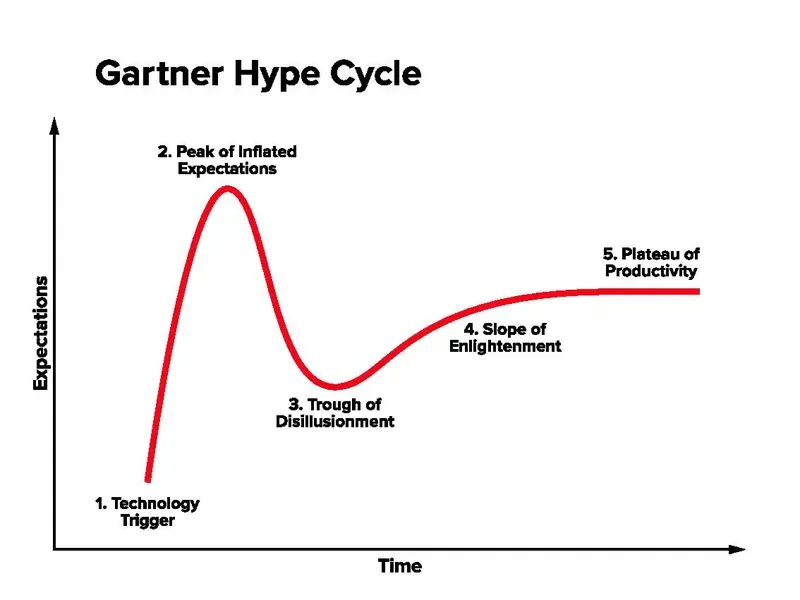
Technology moves in cycles, and we are currently living through the steepest curve of the technology hype cycle. The current manifestation of conformity bias is unmistakable: the compulsion to shove Large Language Models (LLMs) into every layer of software architecture.
Driven by executive pressure, venture capital demands, and peer engineering trends, companies are rushing to implement generative AI features. While LLMs are genuinely revolutionary for tasks involving ambiguous, natural language processing, or contextual synthesis, the conformity bias convinces teams that LLMs are a universal hammer for every computational nail.
Consider these common modern over-engineering anti-patterns:
1. The High-Cost, High-Latency Router
An engineering team needs to categorize inbound customer support requests into four fixed buckets: Billing, Technical Support, Account Recovery, or Feedback.
Instead of deploying a deterministic, lightweight keyword classifier or a simple regex routine that executes in sub-millisecond time for fractions of a cent, the team builds an integration to route the text to a commercial LLM prompt. Suddenly, a basic routing function introduces 800 milliseconds of network latency, risks non-deterministic errors (where the model occasionally makes up a fifth category), and costs thousands of dollars a month in token usage.
2. Complex RAG Replacing Simple Vector Space or Key-Value Lookups
Many applications require a system to retrieve fixed documentation snippets based on a user’s query. The baseline industry reaction is to immediately spin up an elaborate Retrieval-Augmented Generation (RAG) architecture: chunking text, setting up embedding pipelines, deploying a dedicated vector database, and utilizing an LLM to synthesize the final answer.
For many projects, a clean, structured Postgres text-search index or an open-source inverted index (like Elasticsearch or Lucene) provides instant, completely reliable results without the hallucination risks or structural overhead of managing an abstract vector space.
The Architectural Tax of Unjustified LLMs:
Non-Determinism: Traditional software guarantees that given input , the output is always . Shoving an LLM into core application logic introduces statistical probability into your code flow.
Latency Degradation: API roundtrips and token generation times turn instantaneous interactions into loading spinners.
Brittle Dependency Lock-in: Relying heavily on foundational model prompts leaves system behavior vulnerable to subtle updates made by third-party model providers.
Evaluating the Trade-offs: Trend vs. Pragmatism
To recognize where conformity bias is steering your engineering decisions, look at the contrast between trend-driven adoption and first-principles reasoning:
| The Problem | The Trend-Conforming Choice | The First-Principles Alternative |
|---|---|---|
| Data Retrieval | Deploying an LLM-driven vector search for structured inventory filtering. | Using standard relational database indexing and precise SQL filtering. |
| Input Validation | Asking an LLM to parse an input string and verify if it looks like a valid date format. | Writing a deterministic regex pattern or using a native datetime library function. |
| System Scale | Splitting a new backend system into 12 microservices from day one. | Building a modular monolith with clear domain boundaries that can be split later if needed. |
| User Onboarding | Forcing an open-ended AI chat conversational interface onto a simple user checkout flow. | Designing a clean, intuitive 3-step UI form with immediate frontend validation. |
How to Insulate Your Architecture Against Bias
Breaking the cycle of conformity requires structural changes in how engineering teams make decisions. You can use these practical safeguards to ensure your choices remain grounded in engineering reality:
1. Adopt Architectural Decision Records (ADRs)
Never adopt a trending framework or integrate a model based on verbal enthusiasm alone. Implement a strict ADR process. An ADR is a short document capturing:
- The exact context and constraints of the problem.
- The alternative options explored (including the simplest possible boring solution).
- The explicit trade-offs of the chosen technology (cost, latency, complexity).
Forcing engineers to write down the justification for a tool strips away the emotional safety of “everyone else is using it.”
2. Appoint a “Designated Dissenter”
In architecture review meetings, explicitly assign a senior engineer the role of the devil’s advocate. Their sole job during that session is to poke holes in the trending technology being proposed. They must ask hard, foundational questions: What happens when this API goes down? How do we test this deterministically? Can we solve this with 20 lines of vanilla code?
3. Focus on Your Unique Constraints
The core flaw in forensic conformity bias was assuming that because an automated system and an initial expert flagged a match, it must apply universally without looking at the unique differences in the prints.
In code, remember that your company is not Netflix, OpenAI, or Google. Your user base, traffic patterns, team size, and financial constraints are unique to you. A solution that handles petabytes of distributed streaming data efficiently at a global tech giant is often architectural poison for a mid-sized system trying to ship features reliably next week.
Build your systems on what your product explicitly demands today, using foundational engineering principles as your guide. Your cloud bill—and your team’s sanity—will thank you.